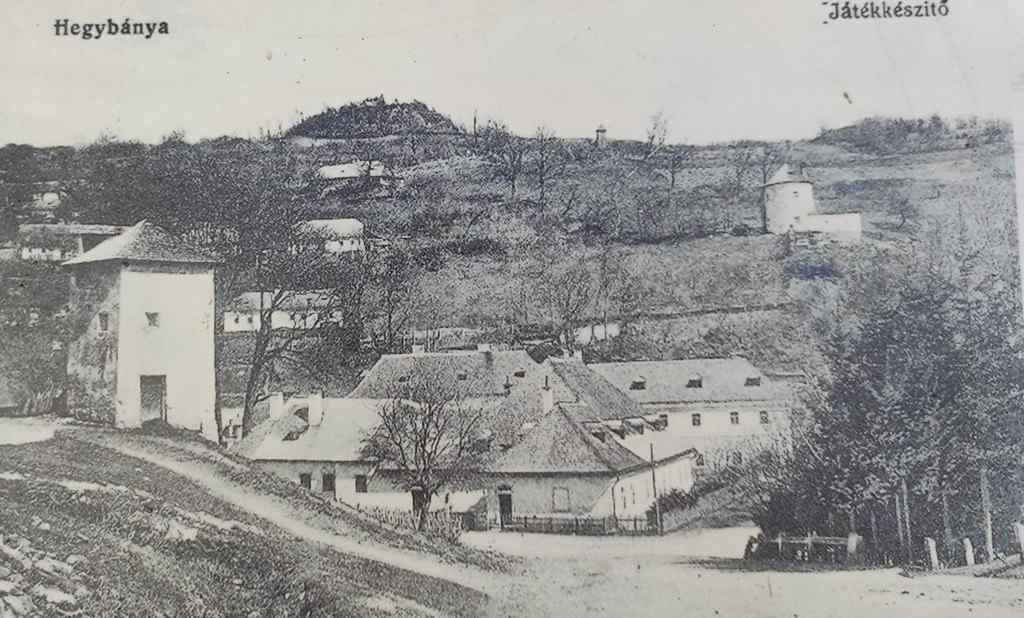
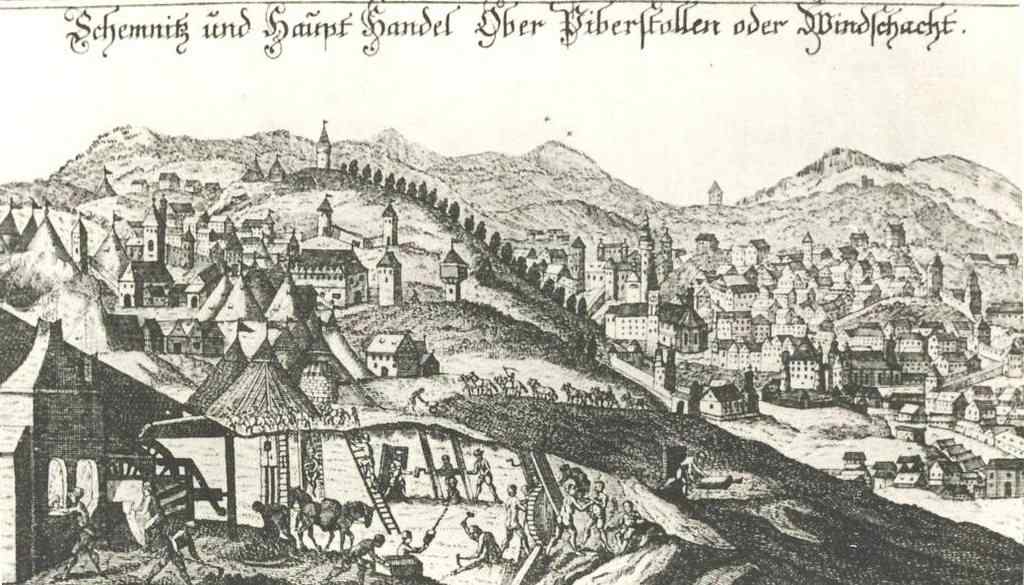
The original mining settlement, today Štiavnické Bane, historically consisted of parts of Siglisberg and Windschacht. Windschacht included a complex of mining buildings that were of great economic importance. During the period of Turkish danger, it was necessary to fortify this complex of buildings.
Fortification works started from the 16th century. According to historical sources, these works can be divided into three stages. In the first stage, brick buildings and partially wooden walls were built with three square gates: Štiavnická, Fuchslošská and Vnútorná. The Vnútorná gate was part of the inner fortification and has been preserved to this day after various construction modifications.
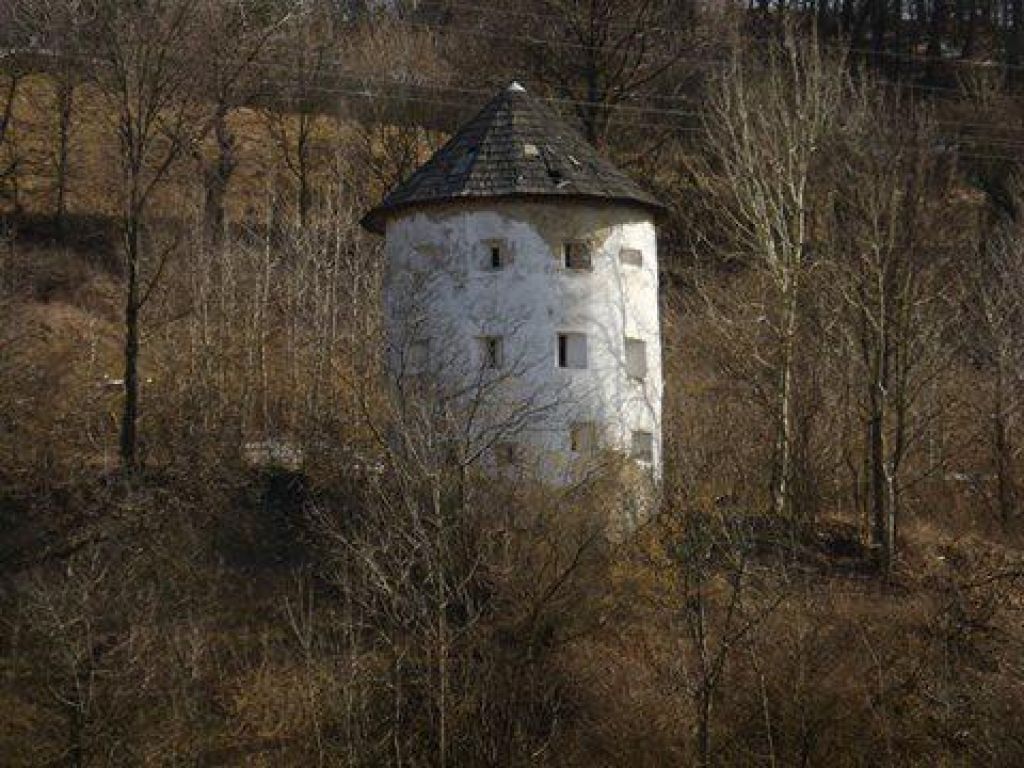
There were three circular bastions in the stone walls, only one of which has survived to this day. Between Fuchslošská and Vnútorná gates stood two bastions with an irregular pentagonal plan. Among the first brick bastions was the Tascher observatory. The circular floor plan of the tower was extended in the upper part by a wooden observation deck.
In the second stage, the Karol and Jozef shafts with the corresponding operational buildings were also included in the fortification. This wall had no gates and was built in the form of log cabins placed between wooden columns.
In the last stage, the fortification was extended to the southwestern and southern parts, which fortified the guardhouse, as well as the Leopold and Magdaléna shafts. This wall had four wooden gates - Siglisbergská, Mlynská, Mestská and Štefultovská. The southernmost part of the wooden fortification was built last.
The mentioned Renaissance circular bastion, which is the only one that has survived to this day, is located on a steep slope and 175 steps leads to it. Repairs to the bastion took place in 1984, but later the bastion was already in bad condition. In 2004, it was therefore sold to a private investor who was to renovate it. Since the investor did not perform any work on the bastion, in 2007 the municipality initiated the purchase of the bastion into its ownership.
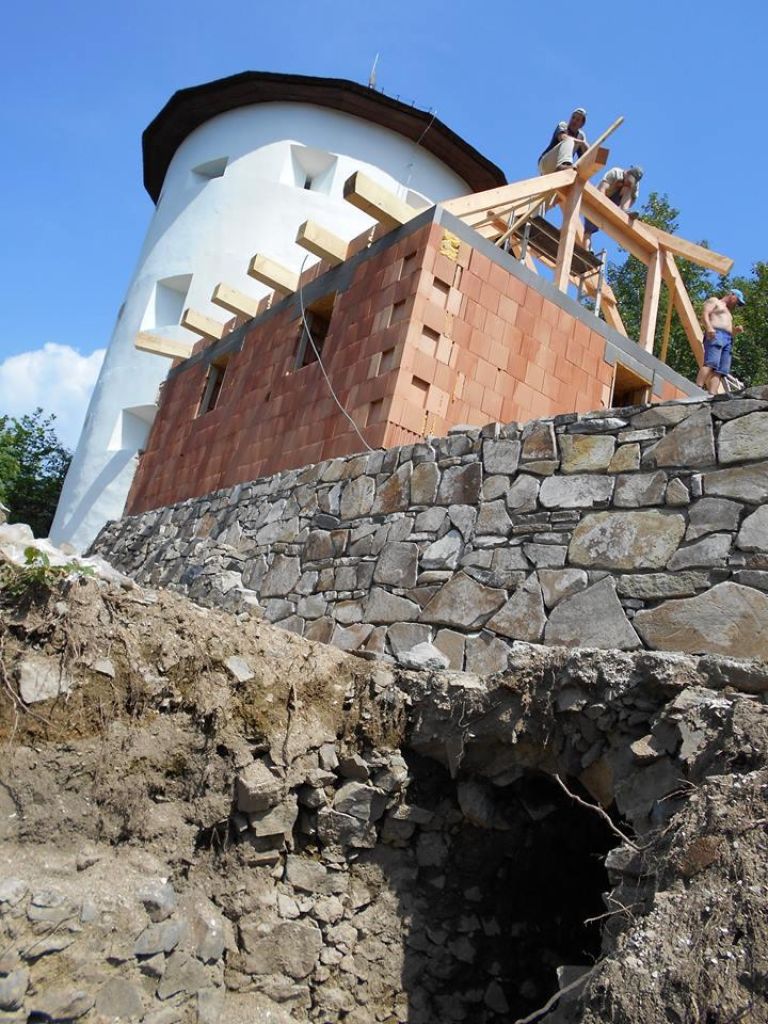
However, the actual reconstruction of the bastion took place only in 2015. The shingled roof was completely reconstructed and an extension was built as part of the project according to old photographs and archaeological research. New electroinstalation was installed, all the original plasterwork was restored in an artistic and artisanal way, windows and doors were secured with historical replicas of wrought iron bars.
New floors were added to the interior and the dilapidated staircase was replaced with a new one. During excavation work on the foundations under the extension, a cellar was discovered, which probably served as a water reservoir in the past. It was also renovated. The reconstruction was completed in 2016, when a partnership agreement was signed between the Norwegian town of Vardø and the municipality of Štiavnické Bane.
At the same time, an exhibition was created in the bastion, which is divided into two parts. The first brings up the famous native, the astronomer Maximilian Hell, who was the first in the world to observe the passage of Venus in front of the solar disk on the island of Vardo, thanks to which he calculated the distance of the Sun from the Earth. The second part of the exhibition shows the world, European and Slovak firsts of the village.

 How to Get There – Piarg Bastion - Štiavnické Bane


 Architecture
 Photo Gallery


 History – Piarg Bastion - Štiavnické Bane
 Legends and Tales